



The Panacea Society - More than one story
by Museum Assistant Peggy Banks
This is a unique and convoluted story. It's convolution naturally divides it into several aspects - several stories.
The central theme is Joanna Southcott's sealed box of prophesies, divinely inspired, in itself a historical curiosity. The work of this eccentric prophetess became an elusive Holy Grail as its contents are never revealed. The assumption for followers was that its contents are divine, as opening instructions stipulate stringent conditions as to when it may be opened (in a time of national crisis) and by whom - it must be opened by 24 Church of England Bishops.
Many Millenarian groups formed, inspired by these prophesies, seeking this truth and solution, one based in Bedford - The Community of the Holy Ghost (founded in 1919), later becoming The Panacea Society once their leader Octavia, (formerly Mabel Barltrop) was considered by her followers to be Shiloh (the spiritual child of Joanna Southcott), the eighth modern prophet and daughter of God. Therefore, she would possess healing powers. This Healing was considered a necessary part of personal salvation and a requirement for the new Millennium and ensuing immortality. Octavia's breath breathed onto linen squares would promote such healing. Their healing mission brought forth many distance Members, who applied to receive the free Healing linen patches.
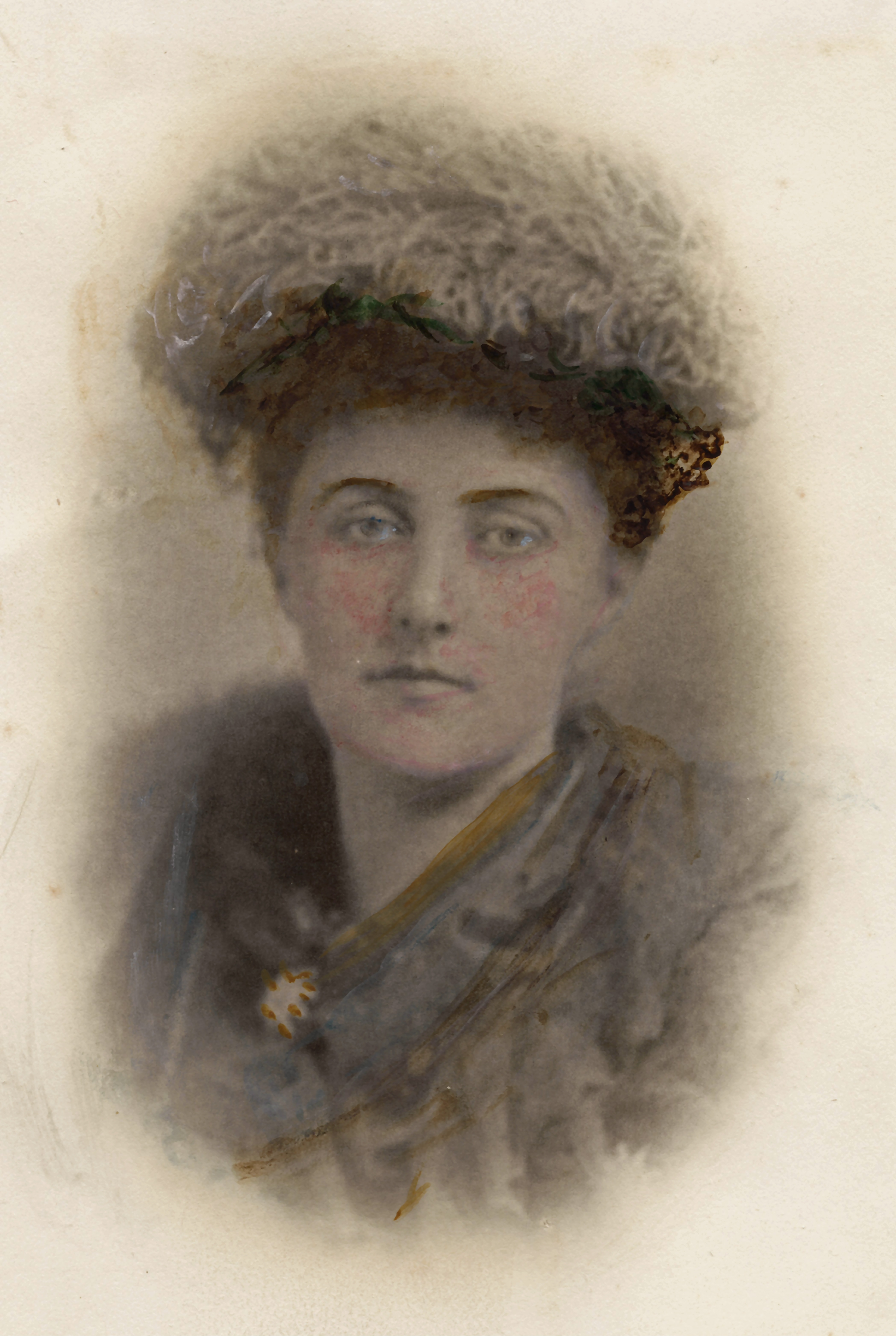 Helen Shepstone
The early formation of the Panacea Society began via correspondence between Mabel, Helen Shepstone (a spiritualist) and Rachel Fox (a prolific writer) due to their mutual interest in Joanna Southcott's prophesies, many of which were actually published. Once the Society formed, the group Members always remained predominately female. Their core goal was to realise the promises that were attached to the prophesies; the Second Coming of Jesus, (at the time of the Millennium) peace on Earth, happiness and immortality. However, there were a myriad of reasons for becoming a Member, that were likely underlying drivers affecting the human psyche - chiefly unhappiness. Loss for instance, provoking a search for meaning in life. Mabel had experienced a great deal of personal loss from an early age, starting with the death of her father when she was aged just 9. Later her brother, and her husband Arthur, leaving her a widow with four children. One of her sons - Eric, was killed in action during World War One.
 Mabel's Husband Arthur Barltrop
Other reasons? For some of the younger Members the appeal of freedom from looking after older relatives. Another appeal for others, likely breaking away from the established church, which during Mabel's time was male dominated, (herself a prolific writer using the male pseudonym of Mark Proctor). For Mabel and her followers, the established church offered no tangible solutions to alleviate the state of the world, especially in the aftermath of WWI, when being an 'Old Maid' was bound to go out of fashion due to the heavy loss of men, with marriage prospects naturally decreasing. The Society attracted former suffragettes seeking a new path. Ellen Oliver, a former suffragette became an Apostle of Mabel/Octavia. Other Members were wealthy women who wanted to create a life independent from their established roles, seeking empowerment of their own voice and independence in their activities. It is interesting to note here that Mabel would have been influenced a little by her cousin Eliza Orme who had earned a Law degree in 1888, but was not permitted to join an Inn of Court, and was paid less than her male counterparts.
Such were the strict norms for women that they could be committed to an asylum for the flimsiest of reasons by their male relatives, most commonly 'hysteria' which amounted to stepping outside their defined submissive role - disobedience or pursuing education are two examples. Mabel herself spent periods of time in asylums, with one occasion being self-committal. As genuine mental health issues are always with us and it appears that Mabel was a sufferer, bound to be compounded by the vast emotional impact of heavy personal losses. However, once her period of self-committal time passed she put on her campaigning hat, calling for improvement within the institutional asylum conditions.
Campaigning became an essential requirement for the Panacea Society, in part to acquire Members, via their Healing for example, but mostly to draw attention to Joanna Southcott's box of prophesies, fervently campaigning to persuade the established church to send forth 24 Bishops to open the box.
Becoming a domestic servant had ceased to be a common choice for women, in part as industrialisation was growing, and again in the aftermath of WWI which changed the dynamics for workers. Having worked in factories, shops and offices during the war years, bringing better pay and escape from the life 'below stairs'. In turn this became a significant concern for the wealthier, even generating books about the problems faced due to the much reduced availability of servants. The Panacea Society had domestic servants right into the 1960s, ending with Gladys Powell, whose Mother and Aunt were Members. Having been brought up with the faith, Gladys became a live-in Member / domestic servant. There was also Emily Goodwin, a widow who moved in to look after Mabel's Aunt Fanny and later focused on her role as The Divine Mother within the Society.
 Servant Gladys Powell in 1960
The General Strike of 1926 (organised by the British Trades Union Congress, TUC) unsettled many, especially the wealthier Members of the Panacea Society. The Society saw this as a sign of the Apocalypse, so campaigned more intensively for 24 Bishops to open Joanna's Box as well as sending out and strategically placing healing linen squares for spiritual protection.
As human nature may predict, there was some vying for power. For example, Edgar Peissart, an American and former follower of Charles Taze Russell, (with the Jehovah’s Witnesses group forming later), became a member of the Panacea Society. He was ambitious, possibly to the point of seeking joint leadership with Mabel or maybe become sole leader. This would never work with a woman now predicted to save the world, which was one of the Society's beliefs. Kate Firth, a wealthy widow and Panacea Society Member purchased 'The Haven' (now offices and reception for visitors to the museum Campus). Kate’s servant Amy Smart was noted to be in trouble for crossing boundaries ‘above her status’. The wealthy Members made sure servants were kept in 'their place'. This leads us to the strict conditions of 'Overcoming' for all Members, including the servants, following strict rules, including obedience and uniformity, dealing with personal and very human faults, thereby seeking purer character in preparation for immortality.
The strict rules also extended to the dining table. One should not stir tea 'vigorously and noisily' and quaintly 'do not search for foreign objects on your plate, and when found, arrange them on the side, as if it were a museum'. A tongue-in-cheek prediction for today, also great humour.
The effects of the Society's beliefs and way of life predictably affected Mabel's children. Dilys, her only daughter, was brought up with the faith, and always remained in the Society. Ivan fell in love and married, keeping his distance by moving to Canada. Adrian was a member for some time before losing his faith in the Society. Besides having his own feelings to cope with, he was concerned for his sister, but did not succeed in getting her to leave. He too had married, which upset his mother as romance, marriage and sex were not allowed. Kate Firth, met and fell in love with new Member Leonard Squire Tucker. Once again, not allowed! Leonard, like Adrian, had doubts about the Society. Consolidated with communications from Adrian, Kate and Leonard moved to London, following a dramatic exit from Kate during one of the evening prayer sessions. They were spied upon by the Society for some years (as was a common practice within the Society). The Panaceans later managed to buy 'The Haven'. Drama!
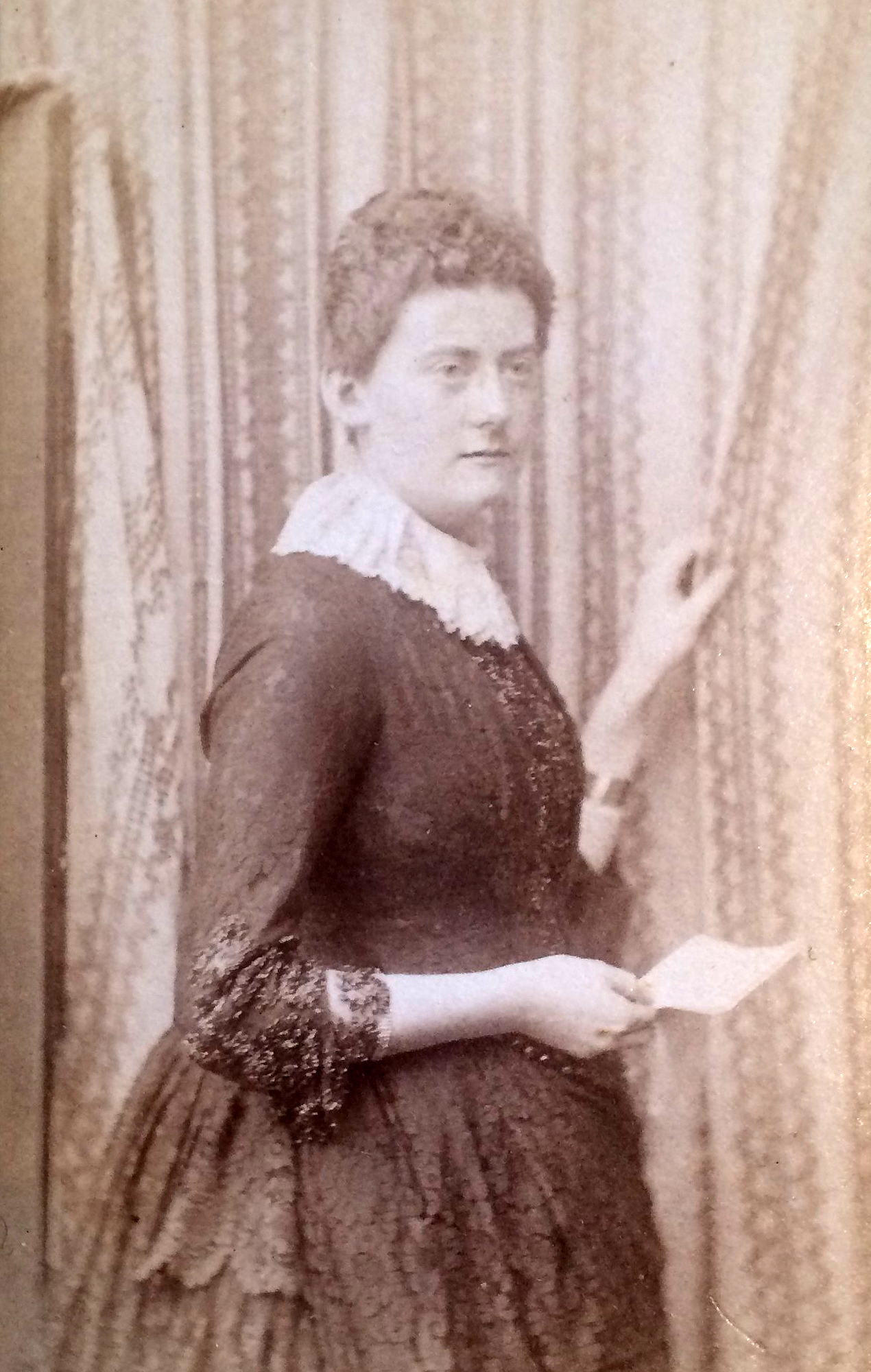 Kate Firth, owner of 'The Haven' on Newnham Road
The above is a snippet of the whole complex story, which, as the title above depicts is many more stories than one. Exploring this story, we can delve into social history, the idea of immortality, and you may wonder if servants were a requirement in paradise, (a parallel with ancient Egypt?) We have psychology, mental illness, campaigning and marketing, espionage in terms of requisite spying upon each other, religion as centre stage, suffrage, family problems, humour, drama and love.
What are we left with today?
A legacy in the form the wonderful houses which now make up the Museum Campus, crammed with unique exhibits such as the 1857 Columbian printing press used by the Society for their own printing and marketing, still in perfect working order and currently used for drop-in printing sessions for visitors. Octavia/Mabel's family home/ Society HQ is now frozen in time, providing a truly immersive experience. ‘Castleside’ is the former Bedford School lodging house for boys, purchased by the Society and converted for the Bishops, which is exhibited in part as still waiting in readiness for the 24 Bishops to open Joanna Southcott's box, forever waiting like the Dickensian Miss Haversham.
 The Haven in 2024
All the houses on site are brimming with curious architectural features of the past which adds to the Museum’s immersive nature, especially as the atmosphere is so tranquil. Not least, the beautifully kept Bedford's own ‘Garden of Eden’, complete with apple trees (and other fruits) croquet, a fish pond, all close by to the on-site Tea Room housed at the rear aspect of The Haven. Very peaceful, and once inside the campus, it's difficult to believe it is so close to a busy town, not too many steps away from the High Street.

